| International Festival Signs of the Night - Bangkok |
lnternational Festival Signes de Nuit - Bangkok |
|
|
12th International Festival Signes de Nuit - Bangkok - August 14-23, 2026
24th International Festival Signs of the Night - Thailand
|
|
Bangkok - The Spirit of Opening
The Festival Signs of the Night - The Spirit of Independence
|
|
Igor Zelic |
Croatia / 2026 / 0:19:39 |
"Opera" is an experimental film that explores perception through a filmic collage constructed with the help of a sin- gle light source. Through layered manipulation of that sin- gle source, the frame gains the rhythm of multiple sources and a play of light that transforms space and perception. This is a film about how an image can conceal reality – and what happens when it can no longer do so. Igor Zelic´ lives and works in Zagreb. He studied Cinema- tography at the Academy of Dramatic Art in Zagreb and works in film and television as a cinematographer, director of photography and lighting designer.
| |

|
JURY DECLARATION
The film plays out like a theatrical play, transforming an ordinary space into a dramatic dreamland through the control of a single light. Despite this simple execution, though it looks complicated to pull off, the film offers a unique experience between cinema and theatre, revealing the nature and limitations of both, and showing us how fragile reality can be, especially in cinema. |
|
DIRECTOR STATEMENT
I was very happy to read the jury’s statement, especially the idea of the fragility of reality in cinema. For me, this fragility concerns not only the image, but also the viewer and the act of perception. Opera was conceived as an attempt to make us aware of how easily our perception can be guided, and how quickly we can accept a constructed image as reality. I also find the connection between cinema and theatre very interesting. The film began as an attempt to reconstruct a living world within a real abandoned space, but I gradually realized that such a reconstruction could only ever consist of fragments of a life that no longer exists.
I am very grateful to the jury for recognizing these ideas in the film, and especially for the Main Award. It means a lot to me. |
|
|
|
Ian Gibbins |
Australia / 2025 / 0:07:10 |
They used to place coins on the eyelids of the dead so they could not follow the lives of the living ... surrounded by ocean we find no clear water ... in the absence of fire our soft tissues are burning ... yet our eyes stay open ..." Beginning in March 2025, large areas of South Australian coastal waters have been devastated by a harmful algal bloom, leading to mass mortalities of uncountable numbers of fish, invertebrates and other marine life. The causes are complex but all arise from the unmitigated effects of anthropogenic climate change. This video has been made from images of fish that have been killed by the bloom and washed up on beaches along the eastern side of Gulf St Vincent. The audio was created from samples taken from videos of living fish, crabs and squid recorded at Seacliff beach, South Australia, in January - February 2025, before the bloom hit. The text is what the fish might say to us, if only they could...
| |

|
JURY DECLARATION
With a deceptively simple approach—focusing on the silent gaze of dead fish and concluding with an inventory of species in the end credits—the film delivers a quiet yet profound warning. This poetic short transforms a minimalistic study of aquatic life into a striking meditation on local ecological collapse and the global environmental crisis. |
|
DIRECTOR STATEMENT
Thank you to the jury for their insightful comments on my video. The harmful algal bloom in South Australia has mostly passed for now. However, the damage to coastal ecosystems and the massive loss of marine life warn us not to ignore the long-lasting consequences of anthropogenic climate change. |
|
SIGNES AWARD
The Signs Award honors films, which treat an important subject in an original and convincing way
|
|
|
Hiroya Sakurai |
Japan /2025 / 0:08:16 |
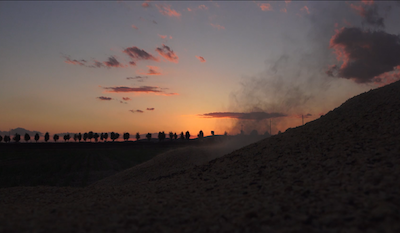
I focused on how the landscape is transformed when the wind as a weather phenomenon streams through the rice paddies cultivated by humans. It also portrays the lives of the farmers who cultivate these paddies and the local residents who share this environment. Weather such as wind, rainfall and sunshine are important elements in cultivation, and humans cultivate and harvest while anticipating these elements, and in this way they sustain human life. Rice paddies are not protected like a greenhouse, and they are cultivated under harsh conditions such as typhoons, droughts, and cold weather. I observed the constantly changing and transforming appearance of the rice paddies through the process of cultivation and weather. I expressed the changing landscape by connecting the sound of wind chimes, which reflect the weather, with the cultivation process.
| |
|
JURY DECLARATION
A masterful record of rural Japanese rice cultivation, this short film beautifully captures the care and harmony sustained by those who tend the land. Through remarkably crisp imagery, precise editing, and the symbolic use of bell tones, the film invites the audience to contemplate the complex dualities between nature and humanity, the natural and the artificial, and the wild and the cultivated. |
|
MENTION FOR THE SIGNS AWARD
The Signs Award honors films, which treat an important subject in an original and convincing way
|
|
|
William Hong-xiao Wei |
Japan, France, United Kingdom / 2025 / 0:30:00 |
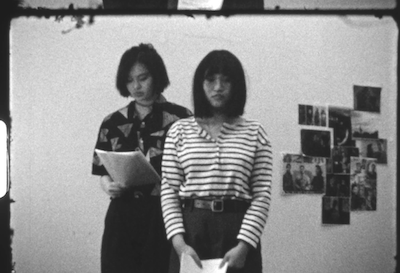
Elegy for the Lost is an essayistic visual prose that takes a lyrical and distinctly "queering" approach to sexual identity, power, and governmentality in contemporary China, where the ongoing ideological tensions between socialism and neoliberalism shape both public culture and private life. The film unfolds a young post-pandemic Chinese migrant’s poignant recollection of her love story within an underground troupe in Beijing, set against the shifting landscape of Chinese urban queer allies and activism. She reflects on the intimacy, struggles, and sacrifices once shared with a lost lover in her voice-over narration, which is interspersed with the film’s kaleidoscopic assemblage of interviews, news archives, found footage, dramatic re-enactments, psychoanalytically informed representations of consciousness, and even artificial intelligence-generated content that challenges the boundaries of political inquiry. As her private memories intertwine with public narratives of resistance, both she and her community navigate secrecy, repression, survival, looming precarity, and displacement under societal pressures, all while confronting the personal cost of existing in a world that demands their silence. Between white frames and black screens, between still images and the heterogeneity of moving images, between the representational layers of realities and the pure, non-representational fields of colours, and between silence, voices, and melodies of nocturnes, ballads and electronic music, we are drawn into the affective flows of the protagonist’s confessions of desires, beliefs, solidarity, social amelioration, hopeless love, and heartbreaking loss.
|
|
|
JURY DECLARATION
Yearning for the past in order to look toward the future, the filmmaker traces the history of queer activism in China combined with footage of a play rehearsal, which serves as a kind of life under surveillance. It may be a sad kind of poem, looking at things that no longer exist, yet life goes on, the journey continues, and the fight will never end. |
|
NIGHT AWARD
*
The Night Award honors films, which are able to balance ambiguity and complexity characterized by enigmatic mysteriousness and subtleness, which keeps mind and consideration moving
|
Organising Principles of Experience
|
|
Gabriela Tropia |
United Kingdom / 2025 / 0:13:00 |
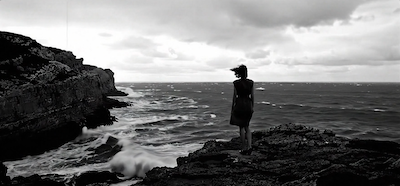
Organising Principles of Experience is an experimental short in which an AI model, tuned to the writings and sensibilities of Maya Deren, collaborates with the filmmaker to imagine new films. It explores memory, possession, and the digital afterlife, questioning what remains when the past becomes data and how an artist might lay claim to her absent hero.
| |
|
JURY DECLARATION
Creating movies using AI feels legitimized when the intent is to question the technology itself, rather than indulging in sterile visual fantasies and deluding oneself into calling them complete. The film constructs an AI model of Maya Deren—one of the world's most influential avant-garde filmmakers—and co-writes a plot alongside her. In just 13 minutes, it raises profound questions regarding the limits and boundaries of AI: How truly innovative and superior is relying on AI for creativity? How accurately does the programmed AI capture Deren's vision, character, and capability? And is borrowing the identity of a deceased director ethical or legal in terms of copyright? While the filmmaker likely has their own conclusions, the answer ultimately lies in how the audience interprets what unfolds on screen. |
|
|
|
|


