| International Festival Signs of the Night - Bangkok |
lnternational Festival Signes de Nuit - Bangkok |
|
|
12th International Festival Signes de Nuit - Bangkok - August 14-23, 2026
24th International Festival Signs of the Night - Thailand
|
|


|
Sunday, August 23, 2026
Thai Film Archive / 15 h
|
|
|
|
|
Unas bolitas de mercurio |
Andrea Marquez |
Argentina / 2025 / 0:08:02 |
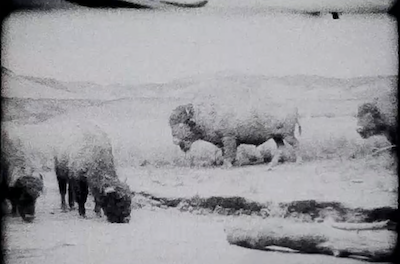
Through the recounting of a dream—an image from the past that insists on reappearing—the film dissects and displays the very materials it’s made of: still photography, moving image, narration, as if these cinematic elements were minerals and gems in a museum showcase. In doing so, it transforms them into an evocative exploration of what is preserved and what is lost. An archive of broken and silent images? A mausoleum of time? By weaving together fragments of memory and cinematic form, the film not only examines the nature of preservation but also invites reflection on cinema itself. What became of its promises, its potentials, or, to
from Gilles Deleuze and Thom Andersen, the thoughts we once had?
|
|
|
|
|
Eric Weeks |
USA / 2025 / 0:08:00 |
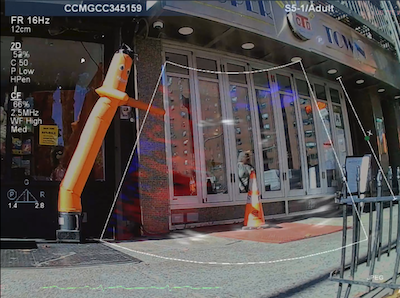
Hi, my name is Weegee. I am a dog. On my license, it says I am a cockapoo, but I don’t know what that means. My parents adopted me five years ago and named me Weegee, after the famous photographer. They always tell me that I channel him, because I am a character, and hold my toys in my mouth like a cigar, just like the original Weegee. That guy called himself "Weegee the Famous", but I want to be famous-er.
|
|
|
|
|
Hiroya Sakurai |
Japan /2025 / 0:08:16 |
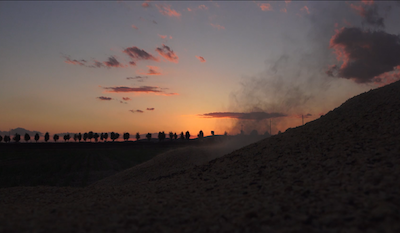
I focused on how the landscape is transformed when the wind as a weather phenomenon streams through the rice paddies cultivated by humans. It also portrays the lives of the farmers who cultivate these paddies and the local residents who share this environment. Weather such as wind, rainfall and sunshine are important elements in cultivation, and humans cultivate and harvest while anticipating these elements, and in this way they sustain human life. Rice paddies are not protected like a greenhouse, and they are cultivated under harsh conditions such as typhoons, droughts, and cold weather. I observed the constantly changing and transforming appearance of the rice paddies through the process of cultivation and weather. I expressed the changing landscape by connecting the sound of wind chimes, which reflect the weather, with the cultivation process.
|
|
|
Like Dew Before a Thunderbolt Vol.1
|
|
Benjamin Poumey |
Switzerland /2025 / 0:04:50 |
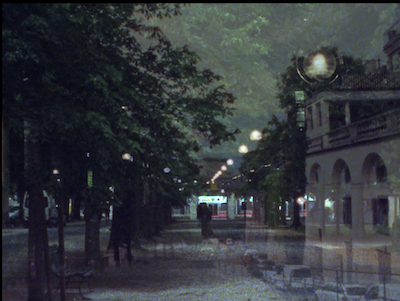
1st volume of a collection of shorts films shot on Super 8 in Geneva, inspired by Jiseiku (farewell poems) written by Samurais in the 16th and 17th centuries. I was touched by these texts, and furthermore by this concept of 'writing a last poem before dying’. Thus, in spite of the huge difference in cultures and eras, something has passed from these samurai to me. Let's say that it's this ‘passage’ that I'm trying to find with the films. It could be likened to an exercise in ‘drifting’ or psychogeography. Between contemplation, thought flows and other visual wandering experiences, I'm shooting images in Geneva to share/recapture/transmit the impressions and emotions conveyed by the texts.
|
|
|
|
|
Malaz Usta |
Netherlands / 2024 / 0:11:00 |
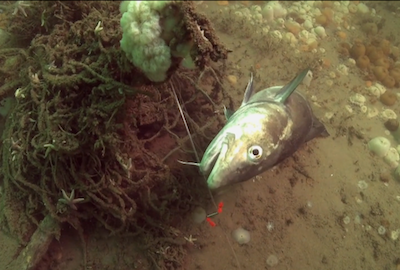
Exiles are asked questions concerning their life, (plans), and reasons for (their choices). The film tries to communicate the feelings of the displaced when being confronted with such questions which are drawn from the director's memory. A parody of misinformation and of broken systems, and an exploration of feelings of confusion, loneliness, and uncertainty.
|
|
 |
|
|
Neil Harvey, Jon Hammerbeck |
United States / 2026 / 0:08:2 |
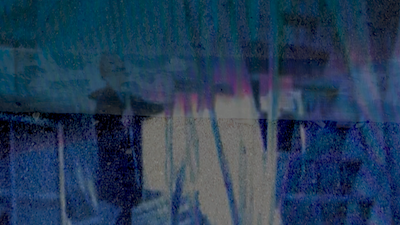
This is our time. “I tell myself it is their fault.” The observer is becoming the observed, illumined by gas lamps or illumined by gas chambers? GodCocteauTheory asks: Are we driven to complicity by noise? Are we driven to complicity by silence? An official blocks the view. A spectral hand passes by again. Is it just another Sunday morning talk show in Paris? From unconscious to dream, from opaque to translucent, I hear voices; Godard and Cocteau’s words fold back on themselves. From comprehension, to music, to pure sound. Descending then rising with Akerman’s voice like “water beneath the earth.”
|
|
 |
|
|
Eleonore de Montesquiou |
Estonia / 2023 / 0:05:42 |
February 2015, Vladimir Putin’s opponent, Boris Nemtsov, was assassinated not far from the Kremlin in Moscow. Images of pain and protest, texts by Pablo Neruda are an open call for reflection in this short film.
|
|
 |
|
|
Ron Chiers |
Belgium / 2025 / 0:02:45 |
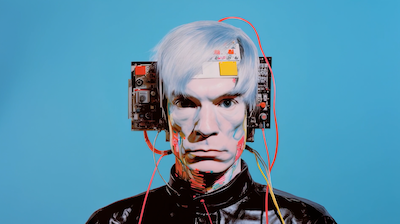
"A Robot of Me" is a short AI-generated film that plays out like a virtual reincarnation of Andy Warhol in the age of artificial intelligence. In an apparently mundane scene - Andy buying soup in a supermarket - a philosophical daydream begins to unfold. The film echoes his famous quote: “Machines have less problems. I'd like to be a machine, wouldn't you?” and raises the question of how Warhol might engage today with social media, AI, deepfakes, and prompts.
|
|
 |
|
|
William Hong-xiao Wei |
France, Spain, United Kingdom / 2025 / 0:30:00 |
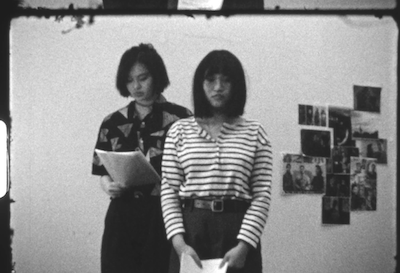
Elegy for the Lost is an essayistic visual prose that takes a lyrical and distinctly "queering" approach to sexual identity, power, and governmentality in contemporary China, where the ongoing ideological tensions between socialism and neoliberalism shape both public culture and private life. The film unfolds a young post-pandemic Chinese migrant’s poignant recollection of her love story within an underground troupe in Beijing, set against the shifting landscape of Chinese urban queer allies and activism. She reflects on the intimacy, struggles, and sacrifices once shared with a lost lover in her voice-over narration, which is interspersed with the film’s kaleidoscopic assemblage of interviews, news archives, found footage, dramatic re-enactments, psychoanalytically informed representations of consciousness, and even artificial intelligence-generated content that challenges the boundaries of political inquiry. As her private memories intertwine with public narratives of resistance, both she and her community navigate secrecy, repression, survival, looming precarity, and displacement under societal pressures, all while confronting the personal cost of existing in a world that demands their silence. Between white frames and black screens, between still images and the heterogeneity of moving images, between the representational layers of realities and the pure, non-representational fields of colours, and between silence, voices, and melodies of nocturnes, ballads and electronic music, we are drawn into the affective flows of the protagonist’s confessions of desires, beliefs, solidarity, social amelioration, hopeless love, and heartbreaking loss.
|
|
 |
| |
|
|
|
|
|


